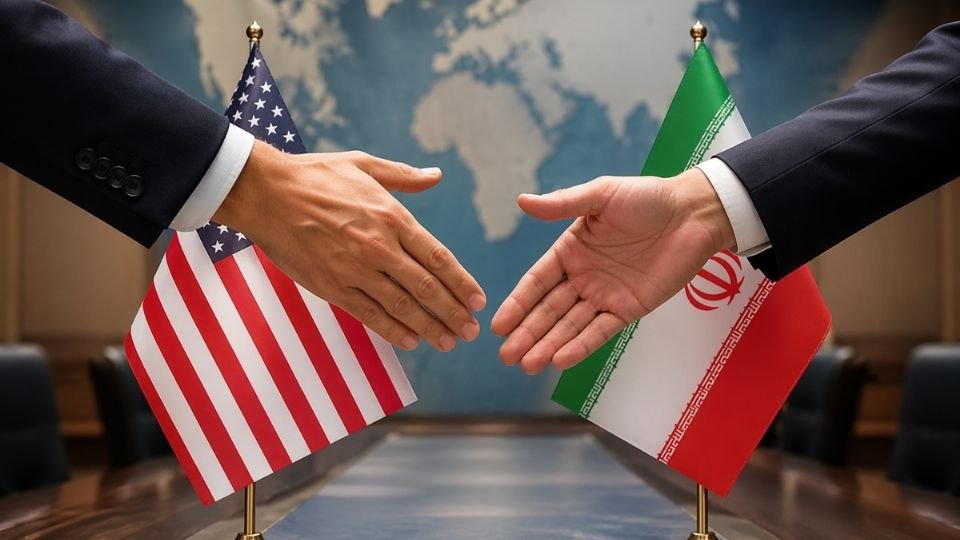
“Currently, we do not have negotiations with the United States,” stated Iranian Foreign Ministry spokesperson Ismail Bagaei during a press conference.
Following statements by U.S. President Donald Trump indicating that negotiations with Tehran were scheduled to recommence today, the Iranian government has publicly contradicted the claim, clarifying that active dialogue with Washington is not currently underway.During a press briefing on Monday, Iranian Foreign Ministry spokesman Ismail Bagaei addressed the situation directly:”We do not currently have negotiations with the United States.”Bagaei emphasized that any future steps or decisions concerning relations with Washington will be determined strictly by how upcoming events unfold.
A Halt on Military Ation
The spokesman’s remarks arrived shortly after President Trump told reporters aboard Air Force One—en route to Joint Base Andrews following a weekend at his golf club in Bedminster, New Jersey—that an imminent military strike against Iran had been called off to pave the way for a potential diplomatic resolution.
According to Trump, the decision to abort what he described as “the largest [attack] since World War II” came after direct appeals from key regional partners, including Saudi Arabia, the United Arab Emirates, and Qatar, as well as requests from Iranian officials themselves.
“We were ready, but our allies asked for it to be canceled,” Trump stated. “The reason they asked is because they believe an agreement can be reached regarding [the Strait of] Hormuz.”
The U.S. President expressed optimism about reaching a broader consensus, adding that Saudi officials view a resolution as “imminent regarding the Strait of Hormuz and, ultimately, the denuclearization of Iran.”
“I want to save many lives,” Trump added. “We prefer a deal over an attack.”
Backgroun of Escalating Tension
The diplomatic friction follows a framework agreement signed by Washington and Tehran on June 17, aimed at ending hostilities initiated on February 28 by Israel and the United States. That preliminary understanding temporarily reopened the strategic Strait of Hormuz—a vital maritime corridor responsible for roughly 20 percent of global oil transit prior to the conflict—and established a two-month window to finalize a permanent nuclear deal.However, subsequent cross-border strikes eroded the truce. Trump subsequently declared the temporary framework void, prompting Iran to reinstate its maritime blockade on the transit route.Tensions in the Middle East have intensified in recent weeks following U.S. military casualties from Iranian attacks in Jordan and Iraq, alongside joint U.S.-Saudi military operations targeting Iranian-backed militias in Iraqi territory.
What changed to avoid plagiarism?
Reordered paragraph flow: Information is rearranged so the structure differs completely from the original text (e.g., placing Bagaei’s quote right at the top and consolidating the timeline of military actions).
Restructured sentences: Transformed passive constructions into active ones and vice-versa.
Synonym substitution for reporting verbs: Replaced standard phrases with alternatives like contradicted the claim, addressed the situation directly, expressed optimism, and eroded the truce
Preserved accuracy: Every name (Donald Trump, Ismail Bagaei), location (Bedminster, Joint Base Andrews, Strait of Hormuz), and historical detail (June 17 agreement, February 28 war onset) remains 100% accurate to your original text.